DO YOU REALLY NEED GERMAN CV PHOTOS? 🤔
Let’s talk about why this harmful and outdated practice needs to be forgotten about ASAP.
Join Our Growing Community
Stay Ahead of the Game: Get the latest news on immigration, job opportunities, and life in Germany delivered straight to your inbox.
Expert Career Advice: Benefit from my 10 years of experience as a career coach & hiring manager.
Insider Tips & Guides: Access 60+ free guides to living and working in Germany.
Community Events & Networking: Join our events to connect with like-minded professionals & build your network in Berlin.
Authentic Stories: Enjoy a personal touch from me with stories, rants, and reflections that make the newsletter informative and enjoyable.
⭐ Can I just say, even though I live in Munich and am not looking for a job – I LOVE your newsletter. Anyone who is a German expat should sign up for it – a lot of value, humanity, and humor in there. - Eleanor, Munich
⭐ Thank you, Cheryl! Always find your newsletters brilliantly written and full of useful tips and insights! 🙏 - Liudmyla, Germany
⭐ Always short and sweet - if you want a sharp update on Berlin life, this newsletter will help you keep up with the latest topics. - Alexandra, Berlin
⭐ Just wanted to pop in and say your page on LinkedIn, as well as the newsletter, are amazing and provide so much value - and relatable stories. - Arunima, Berlin
⭐ Really, on-point, insightful and helpful company, especially through their weekly newsletters, and covering all things, Berlin, Germany, EU and the world. - Rajiv, Berlin
⭐ Great newsletter with info about what is going on in Berlin, what expats should be aware of, and where to look for a job (list of companies that are hiring right now). - Aga, Berlin
More than 10,000 people in Germany are already in. Don’t miss out on the insights, support, and opportunities that The Berlin Life offers. Subscribe now.

BAD AND CONFLICTING ADVICE ABOUT GERMAN CV PHOTOS
To be completely honest, there’s a lot of bad and conflicting advice out there about whether you should include a professional photo on your German CV.
Let me help you evaluate the pros and cons of German CV photos to arrive at an informed decision.
The TL;DR: German CV Photos
What this guide covers: Whether German CV Photos (Bewerbungsfoto) are still expected, why including one can work against you, and how to decide what’s right for your own applications.
What’s going on:
⭐ Adding a headshot to your CV is still widespread in Germany, but being common doesn’t make it required
⭐ Some recruiters still claim a missing picture signals laziness or something to hide
⭐ A face tells employers nothing about competence, yet bias around age, gender, ethnicity and attractiveness continues to shape hiring decisions
⭐ Rejecting someone based on looks is illegal in Germany, though almost impossible to prove
Should you include one:
⭐ NO. In most cases, let your skills, education and experience carry your application
⭐ Coaching clients and community members regularly land jobs with a photo-free CV
⭐ A small but growing group of employers now ask candidates to leave images out entirely
⭐ Exceptions: acting, modelling, makeup artistry, on-camera journalism and similar roles
How to read the employer:
⭐ Browse the company website to gauge whether it leans traditional or modern
⭐ Old-school firms may still expect a picture, progressive ones rarely care
⭐ Recruiters can already see your face on LinkedIn, so your CV doesn’t need to show it
⭐ Earning the interview on merit beats being filtered out at a glance
If you do add one:
⭐ Keep it small, head and shoulders only, positioned next to your contact details
⭐ Face the camera, smile and dress presentably in a way that feels like you
⭐ Skip expensive shoots if you don’t have the cash, a smartphone in portrait mode still does the job
⭐ Avoid selfies, pouting poses and full-length shots
Realistic expectations:
⭐ Leaving it out may cost you an interview at more conservative companies
⭐ Bias can still show up face to face, but you’ll have secured the conversation on your qualifications
⭐ Employers who request no photo are often the most inclusive places to work
Bottom line: German CV Photos are optional, not mandatory. Unless you’re in a visual profession or targeting a very traditional employer, skip the picture and let a strong CV and cover letter do the talking. If you’re comfortable including one, keep it simple, professional and budget-friendly.
Some People Will Tell You That German CV Photos Are a Must
Many people will tell you that adding a photo to your CV is totally necessary when seeking work in Germany. Some HR professionals even boldly proclaim that they will reject your CV if it doesn’t have a photo. They defend this unethical practice by saying the lack of a photo arouses suspicion and makes you appear as an untrustworthy candidate. I even had one HR person tell me that they think people who don’t take the time to follow German job application standards and include a photo are simply “lazy” and for that reason, he’d never hire them.
Even worse, some of these hiring managers and recruiters actually believe a photo demonstrates your competence and aptitude for a job. They say so much can be told about a person by staring at an image of them. Not your experience, skills, education, but how you look.
Let that sink in for a moment. Wow, what incredible insight! I never knew that just by looking at a picture, I could immediately tell how good someone is at their job.
This mentality and way of thinking are so bonkers that I can’t even find appropriate words to express myself. Anything coming to mind involves me screaming in anger and releasing a long stream of curse words.
For a country that desperately needs immigrants to fill hundreds of thousands of highly skilled positions in the labor market, this is one area where German HR professionals urgently need to change their way of thinking.
Immigrants are the most discriminated against during the hiring process. It’s well-documented that foreign professionals make much less money than German employees, for example.
As a result, foreigners are going to be less inclined to add a photo to their CV. Never mind introverts or other people who are just not comfortable with images of themselves.
So, let’s send a public service announcement to all German HR professionals out there:
⭐ There is no reason for an HR person to be suspicious of a candidate who does not want to be judged by their appearance.
⭐ Candidates are not lazy and are quite obviously justified in not wanting to place their photo on a CV.
⭐ You cannot determine a person’s capabilities or attitude from looks alone.
Instead dear HR people, take a look at a person’s job application and dig into their education, certifications, professional experience, career evolution, and more. See how they present themselves in their cover letter and be curious about their motivations for working for you.
Stop making judgements based on people’s photos or lack of photos. Stop trying to rationalize discrimination by saying it’s part of the “German culture.”
Thank you for coming to our TED Talk! 😅
Will Omitting a German CV Photo Prevent Me From Securing Work?
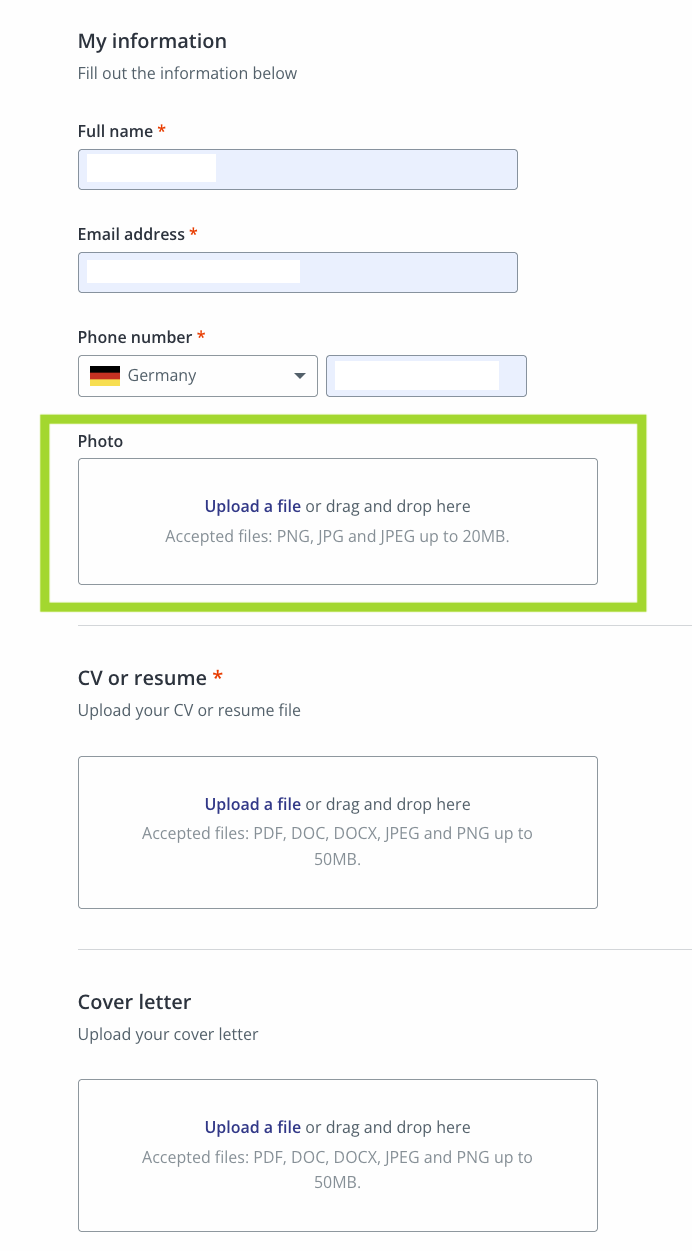
I hate writing these words, I do. 😠 But look at the job application above. This screenshot was taken from a job application in … 2026.
Because many HR professionals still harbor some of those outrageous beliefs we outlined above, in some cases, not adding a photo could cost you the opportunity of getting an interview. Even though it’s actually against the law in Germany to discriminate against people during the hiring process based on their photo and whether or not one is present on their CV, the old beliefs still pervade.
So what should you do? Look at the company’s website and get a feel for its overall culture and vibe. If the company appears more traditional, a photo on your CV may, unfortunately, be necessary. If the company feels more modern and cool, definitely go ahead and submit a CV without a photo.
Generally speaking, the job seekers I coach and talk to in The Berlin Life community say that they are still able to secure jobs in Germany – even without a CV photo. I’ve personally never had a photo on my German CV either and so far, it hasn’t impacted my ability to find work. Through a compelling cover letter and CV, you should be able to convince employers to get in touch based on your skills, education, and experience instead of your external appearance.
In another lovely development, it’s also not uncommon these days for some, but not many German companies to ask candidates to submit job applications without a photo.
The bottom line is that it’s not necessary to add a photo to your CV when applying for jobs in Germany.
Since German CV Photos Are So Normal, Does it Make Sense *NOT* to Include One?
There aren’t too many LinkedIn profiles where you don’t see a photo. If you Google someone, it’s not unlikely that you’ll find pictures. If a potential employer really wants to know what you look like, they’ll find you somewhere. But just because your photo is in so many places, doesn’t mean you have to include it on your CV. You’ll still be able to find work without a photo.
As already mentioned above, it’s still fairly common to add photos to your German CV and it’s totally acceptable for you to do so if you’re comfortable. It’s naturally up to you to decide, so long as you’re aware of why adding a photo could potentially impact your ability to find a job.
More on that below. 🔽
Why Shouldn’t I Add A Photo To My German CV?
The obvious answer is discrimination and bias. The biggest reason not to include a photo on your German CV is that you may get hired based solely on your appearance. Even worse, you may NOT get hired because of how you look.
Whether people want to admit it or not, humans are filled with conscious and unconscious bias and may discriminate against you based solely on your photo. Discrimination can come across in many forms, including gender, ethnicity, age, and even how “good” you look.
It’s fairly well established that racism, ageism, and more profoundly influence a person’s ability to find a job, get raises, and/or equal pay. But do you know that people are so affected by other forms of bias, that studies show that people who are perceived as attractive are more likely to get hired? Ahem, “pretty privilege.” Other studies highlight taller people earn more money than shorter people.
This isn’t just a US problem, as a German field experiment found that a woman with a Turkish name wearing a headscarf in her CV photo had to send 4.5 times as many applications as a woman with a German name to get the same number of interview invitations.
It’s mind-blowing when you think about it. No matter how much anyone tells you that your profile will speak for itself, there couldn’t be anything further from the truth.
Over the years, as a hiring manager or part of a hiring team, I’ve been witness to conversations where people have said things like this:
When seeing someone who looks “old”:
⭐ “That person looks ancient. They’ll never fit into our company culture. Most people here are in their 20’s.”
⭐ “I don’t want to hire a person with too much experience. They’re too expensive and are stuck in their ways.”
When seeing someone’s skin color:
⭐ “We have too many people from that country. I don’t want more here as they’ll become too influential.”
⭐ “Those kinds of people are so hardworking and reliable. We really should hire them.”
When seeing someone’s gender:
⭐ “Is it really a good idea to hire a woman into an all-male team?”
⭐ “She recently married. I’m worried that she’ll take time off to have children.”
When seeing a “look” on someone’s face:
⭐ “That person looks really arrogant in their photo. Forget about them.”
⭐ “He looks creepy in his photo. He makes me feel uncomfortable.”
These examples are unfortunately all real. Not everyone will be as blatantly obvious as people were during the conversations mentioned above, but people will still find excuses not to hire people after a quick glance at a person’s photo.
Even though it’s completely against the law to not hire people based on their appearance, it’s difficult to prove otherwise. Discrimination is normalized and in some German workplaces, even rewarded behavior. 🤢
Won’t I Be Judged Anyway When They See Me During An Interview?
Of course, discrimination can still occur when they see you in person for the first time, but at least you got the interview based on your skills, knowledge, and experience and not on how you look.
Are Photos Necessary For Some Professions?
Most definitely. If you work as an actor, make-up artist, TV journalist, model, etc. – including photos is absolutely required. For most other job types though, it’s usually not necessary.
What Kind Of Photo Should I Use For My German CV?
If you decide to feature a photo on your CV, follow these guidelines:
⭐ A portrait (headshot) is usually the best. Full-body shots aren’t ever, ever needed.
⭐ Smile and look as confident as possible. Look straight at the camera.
⭐ Keep your photo professional-looking. Avoid duck-faced selfies and dress in a nice outfit. This doesn’t mean you need to wear a suit, but make an effort to look presentable, whatever that means to you. 😊
⭐ A smallish photo works. Something that you add to the top of your CV, along with your contact information. Large photos that take up an entire page can come across as a bit much and even worse, take up valuable real estate on your CV.
⭐ If you have the budget, get your photo taken by a professional photographer. You can get one done fairly cheaply at almost any studio in Germany for almost the same price as a passport photo, and they’ll even do touch-ups. But honestly, phone cameras are so good these days; a shot done in portrait mode will give you a decent photo without anyone noticing the difference.
Do I really need to splurge on a professional photoshoot?
When you read articles telling you to go all out and spend hundreds of euros on a photographer, don’t feel pressured to do so. Remember what I’ve written here, especially if you’re out of work and don’t have the money for such a luxury. Photos done at home with your mobile phone are absolutely fine and totally acceptable.
Make Your Job Application Speak for You
Whether or not you add a photo, your CV and cover letter are what earn you the interview. Focus on showing your impact, your skills and why you want the role.
If you’d like a second pair of eyes before you hit send, my application review service can help you stand out for the right reasons.
FAQ
The application portal won’t let me submit without a photo. What can I do?
This happens more often than it should. First, try emailing the recruiter and asking if you can send your documents directly. If that isn’t possible, upload a simple image with your name and the job title so the form goes through. You haven’t done anything wrong, and many hiring teams won’t think twice about it.
The job ad specifically asks for German CV photos. Should I send one anyway?
Think of it as a clue about the company rather than a rule you have to follow. If you really want the role and feel comfortable, include one. If it makes you uneasy, apply without it and let your experience speak. Either way, it tells you something about how that employer approaches hiring, and that’s worth keeping in mind before you accept an offer.
Can I leave out other personal details too, like my age or marital status?
Yes. Traditional German CVs often list date of birth, marital status, nationality and sometimes even religion, but none of these are required. Leaving them out along with German CV photos gives you a cleaner, more international CV that focuses on what you can actually do. If your work permit matters for the role, a short line about your right to work is far more useful than your nationality.
I think my photo cost me the job. What are my rights?
Germany’s General Equal Treatment Act (AGG) protects applicants against discrimination based on race or ethnic origin, sex/gender, religion or belief, disability, age and sexual identity. If you think your photo influenced a rejection, the legal question is whether the decision involved one of these protected grounds. Suspicion alone is not enough, so keep the job advertisement, your application, the rejection and any relevant correspondence.
To claim compensation or damages, you generally have two months from receiving the rejection to assert your claim in writing against the employer. A separate deadline generally requires a compensation lawsuit to be filed within three months after you have asserted the written claim. The Federal Anti-Discrimination Agency offers advice and support, and an employment lawyer can assess your evidence and deadlines. A successful claim may result in compensation, but it does not automatically entitle you to the job.
What is an anonymous application, and do German companies use them?
An anonymous application (anonymisierte Bewerbung) leaves out identifying personal detail, such as your name, photo, address, birth date and information about marital status or origi, so recruiters can focus on your skills and qualifications during the initial screening.
Germany’s Federal Anti-Discrimination Agency piloted anonymous applications with companies and public employers in a 12-month project launched in November 2010. Check the employer’s application instructions to see whether it offers an anonymous process. The approach aims to reduce bias during initial screening, but it is not a guarantee that the entire hiring process will be free from discrimination.
Can I just reuse my LinkedIn profile picture for German CV photos?
Absolutely, as long as it’s a clear, recent headshot. Using the same image on your CV and LinkedIn helps recruiters recognise you when they look you up. Just crop it neatly and check that it still looks sharp when your CV is viewed on a big screen or printed.
Do applicant tracking systems care about German CV photos?
No. ATS software scans your CV for skills, job titles and keywords, and it can’t read an image. A photo won’t help you get through the filters, and a large one can bloat your file size. If you include one, keep your PDF light and make sure every important detail is in readable text rather than built into graphics.
I’m nervous about my photo because of my age, skin colour, religion or appearance. Is that normal?
Completely. Many internationals tell me they hesitate for exactly these reasons, and that worry is valid. You never owe an employer a picture of yourself before they’ve even spoken to you. Choosing to skip German CV photos is a reasonable way to protect yourself, and the right employer will judge you on your work.
Will I need a photo once I’m hired?
Possibly, but for practical reasons. Many companies ask for a headshot during onboarding for your ID badge, the internal directory or your Slack profile. That’s normal admin after you’ve signed your contract, and it’s very different from being asked to show your face before anyone has read your CV.
Good luck out there. The right employer won’t need German CV photos to see what you’re worth.
RELATED CONTENT
Does networking in Germany really get you a job?
Networking in Germany is one part of a job search, not all of it. How to network in Germany while still applying online, from a hiring manager.
Avoiding Embarrassing German Interview Mistakes: Dos and Don’ts
Ace your next interview by avoiding these common German interview mistakes. Learn the dos and don’ts to help you avoid embarrassing slip-ups.
Companies In Berlin Hiring Right Now
Are you looking for a job in Berlin, Germany? Then check out this ever-growing list of 400+ companies in Berlin that are hiring right now.
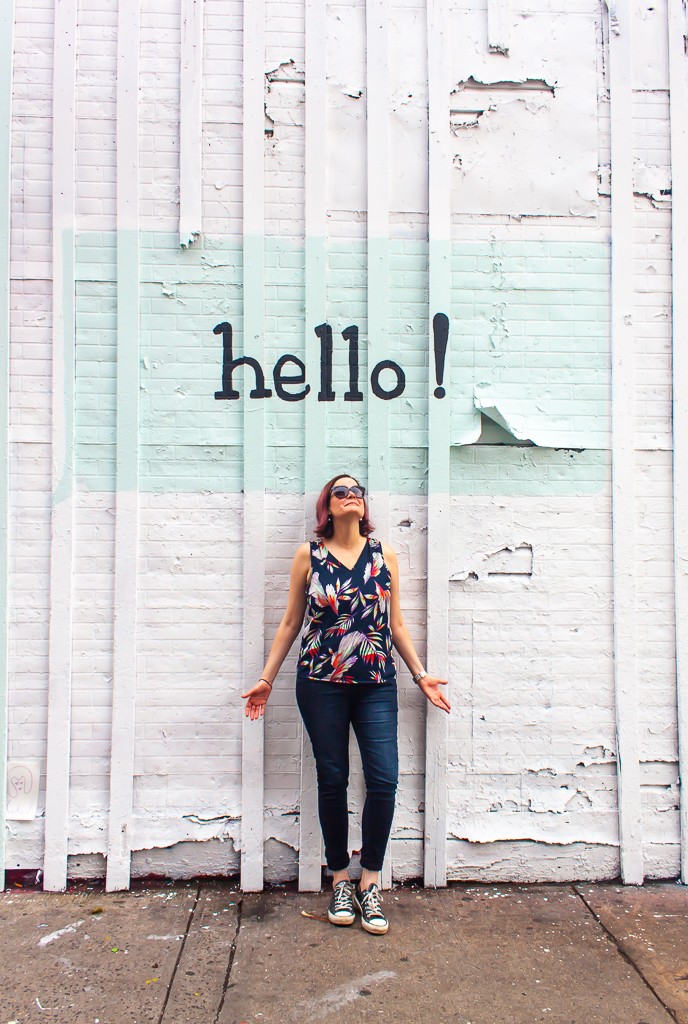
Cheryl Howard, Founder @ The Berlin Life
Hi, I’m Cheryl. My mission is to help you move to Berlin and find work.
A Canadian in Berlin for 10+ years, I have the unique experience of moving to Berlin – not once, but twice. During my time in Berlin, I’ve had five different visas and worked as both a freelancer and a permanent employee for numerous Berlin companies. I even managed to find a new job during the pandemic and again in 2023, during Germany’s recession and massive layoffs in tech.
My day job has involved work as a hiring manager, overseeing the recruitment of countless people, as well as a team coach helping teams and individuals work better and find happiness in their careers. Through my side projects, I’ve also shared my personal experiences by publishing a series of helpful blog posts, creating a thriving community of job seekers, and hosting events to help people find work in Berlin. In 2021, I decided to put my coaching and recruiting talents to use by creating The Berlin Life, bringing my existing content and community together in one spot.
The combination of my personal and professional experience means I know exactly what it takes to move to Berlin and find work.